California Colleges Ranked by Acceptance Rate
If you search for California college acceptance rates, you will usually end up with a messy mix of years, school types, and source quality.
So for this list, I kept the scope clean: these are the UC campuses currently live on Acceptd, ranked by their official fall 2025 first-year admit rate as published by UC Admissions.
That makes the comparison much more apples-to-apples. You can also click into each school's profile on Acceptd Colleges if you want more context than the acceptance rate alone.
The ranking
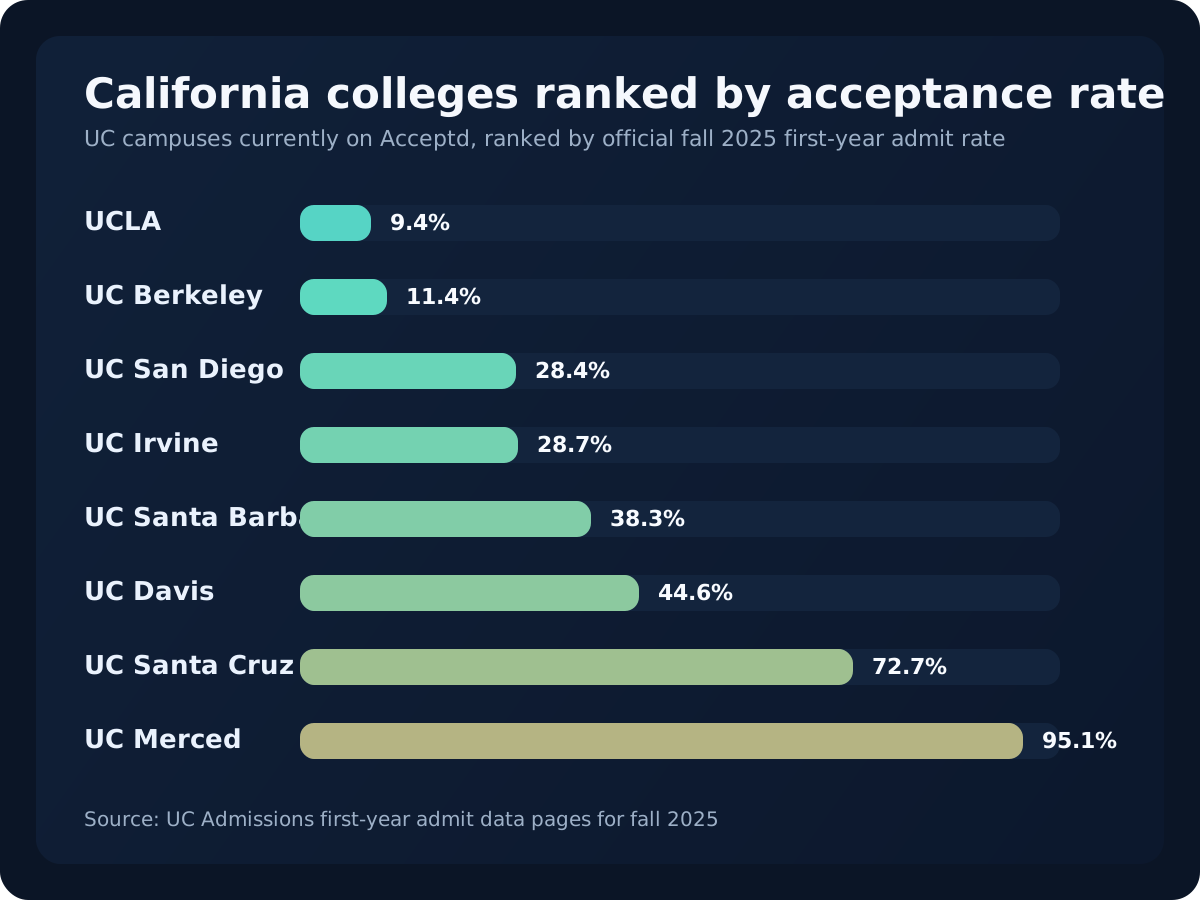
- UCLA — 9.4% admit rate
13,660 admits from 145,070 applicants
- UC Berkeley — 11.4% admit rate
14,451 admits from 126,836 applicants
- UC San Diego — 28.4% admit rate
38,846 admits from 136,740 applicants
- UC Irvine — 28.7% admit rate
35,661 admits from 124,230 applicants
- UC Santa Barbara — 38.3% admit rate
42,170 admits from 110,178 applicants
- UC Davis — 44.6% admit rate
45,963 admits from 102,980 applicants
- UC Santa Cruz — 72.7% admit rate
48,244 admits from 66,373 applicants
- UC Merced — 95.1% admit rate
46,932 admits from 49,358 applicants
What this list does and does not tell you
Acceptance rate is useful, but it is not the same thing as your personal odds.
UC Admissions itself says these admit-data pages should be used as a general guide to selectivity, not as a prediction of an individual student's outcome. That matters because campuses review students in context, and outcomes can look very different by academic profile, major interest, and applicant pool strength.
This ranking is still helpful for one reason: it gives you a fast, source-backed way to understand which UC campuses are currently the most selective overall among the California schools listed on Acceptd.
It also shows how wide the range can be. The difference between UCLA at 9.4% and UC Merced at 95.1% is enormous, even though both are part of the same public university system.
How to use this on Acceptd
The best next step is not to stop at the acceptance-rate list.
Use the ranking as a starting point, then click into the college pages on Acceptd Colleges and compare them against real student outcomes on Acceptd Browse. A school's overall admit rate can tell you something about selectivity, but real profiles add the context students actually need: academics, outcomes, and how different applicants stack up in practice.
That is a better way to think about reach, target, and safety than relying on one percentage alone.